PLACEBO EFFECT
PLACEBO EFFECT
- A placebo is anything that seems to be a "real" medical treatment -- but isn't. It could be a pill, a shot, or some other type of "fake" treatment. What all placebos have in common is that they do not contain an active substance meant to affect health. Placebos are an important methodological tool in medical research.
- Placebo effects are the subject of scientific research aiming to understand underlying neurobiological mechanisms of action in pain relief, immunosuppression, Parkinson's disease and depression. Brain imaging techniques done by Emeran Mayer, Johanna Jarco and Matt Lieberman showed that placebo can have real, measurable effects on physiological changes in the brain
How Are Placebos Used?
- Researchers use placebos during studies to help them understand what effect a new drug or some other treatment might have on a particular condition.
- For instance, some people in a study might be given a new drug to lower cholesterol. Others would get a placebo. None of the people in the study will know if they got the real treatment or the placebo.
- Researchers then compare the effects of the drug and the placebo on the people in the study. That way, they can determine the effectiveness of the new drug and check for side effects.
What Is the Placebo Effect?
- The placebo effect has sometimes been defined as a physiological effect caused by the placebo,Sometimes a person can have a response to a placebo. The response can be positive or negative. For instance, the person's symptoms may improve. Or the person may have what appears to be side effects from the treatment. These responses are known as the "placebo effect."
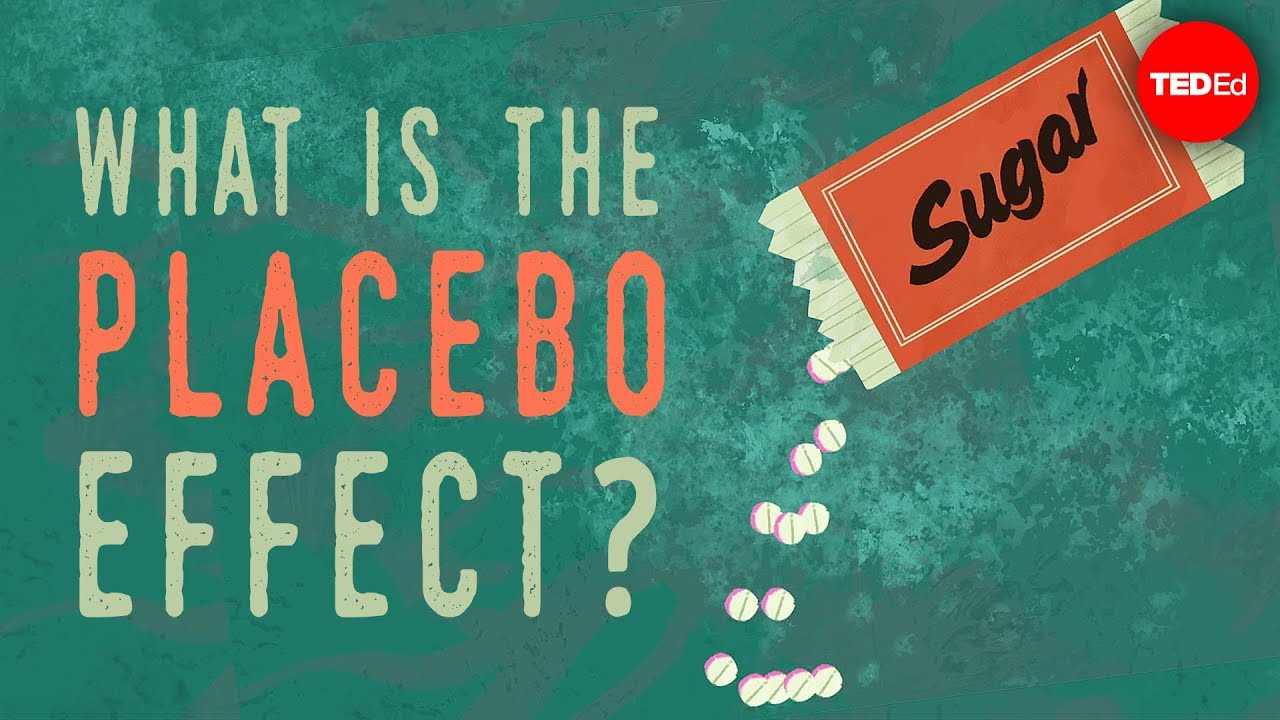
There are some conditions in which a placebo can produce results even when people know they are taking a placebo. Studies show that placebos can have an effect on conditions such as:
- Depression
- Pain
- Sleep disorders
- Irritable bowel syndrome
- Menopause
In one study involving asthma, people using a placebo inhaler did no better on breathing tests than sitting and doing nothing. But when researchers asked for people's perception of how they felt, the placebo inhaler was reported as being as effective as medicine in providing relief.
Research suggests that for psychological reasons, some placebos are more effective than others. Large pills seem to work better than small pills, colored pills work better than white pills, an injection is more powerful than a pill, and surgery gives a stronger placebo effect than injections do.Research has also shown when it comes to specific psychological disorders, such as mild or moderate depression, placebos have the same effects compared to antidepressants.
The Power of the placebo effect.
There are certain modern-day examples that show just how powerful placebos can be... and why exploring them as an alternative to side-effect-ridden medications makes sense.
One such example is the classic New England Journal of Medicine knee surgery study.1 This was, without question, one of the most amazing studies I have ever seen published, as it definitely proves the power of your mind in healing.
This double-blind, placebo-controlled, multi-center trial performed at some of the top U.S. hospitals found that most knee surgery for osteoarthritis results in a $3-billion hoax. It is not actually the surgery itself that is responsible for the improvement, but rather is the placebo effect. More precisely, it's the ability of your brain to produce healing when you believe it should be happening (such as after you receive knee surgery). The researchers concluded:
“In this controlled trial involving patients with osteoarthritis of the knee, the outcomes after arthroscopic lavage or arthroscopic débridement were no better than those after a placebo procedure.”
Another example has to do with antidepressants. Research suggests there is little evidence that antidepressants have any benefit to people with mild to moderate depression, and they work no better than a placebo..

One meta-analysis published in PLoS Medicine concluded that the difference between antidepressants and placebo pills is very small – yet these drugs remain one of the most prescribed drugs in the United States!
In a case like this, where there is little difference in effectiveness, but the sugar pills produce far fewer detrimental side effects, it makes the placebo far preferable to the antidepressants.
- Pain: The placebo effect is believed to reduce pain—a phenomenon known as placebo analgesia—in two different ways. One way is by the placebo initiating the release of endorphins, which are natural pain killers produced by the brain.The other way is the placebo changing the patient's perception of pain. "A person might reinterpret a sharp pain as uncomfortable tingling."One way in which the magnitude of placebo analgesia can be measured by conducting "open/hidden" studies, in which some patients receive an analgesic and are informed that they will be receiving it (open), while others are administered the same drug without their knowledge (hidden). Such studies have found that analgesics are considerably more effective when the patient knows they are receiving them.When administered orally, placebos have clinically meaningful effects with regard to lower back pain
- Depression: In 2008, a controversial meta-analysis led by psychologist Irving Kirsch, analyzing data from the FDA, concluded that 82% of the response to antidepressants was accounted for by placebos. However, there are serious doubts about the used methods and the interpretation of the results, especially the use of 0.5 as cut-off point for the effect-size. A complete reanalysis and recalculation based on the same FDA data discovered that the Kirsch study suffered from important flaws in the calculations. The authors concluded that although a large percentage of the placebo response was due to expectancy, this was not true for the active drug. Besides confirming drug effectiveness, they found that the drug effect was not related to depression severity.Another meta-analysis found that 79% of depressed patients receiving placebo remained well (for 12 weeks after an initial 6–8 weeks of successful therapy) compared to 93% of those receiving antidepressants. In the continuation phase however, patients on placebo relapsed significantly more often than patients on antidepressants. A 2009 meta-analysis reported that in 2005 68% of the effects of antidepressants was due to the placebo effect, which was more than double the placebo response rate in 1980.While some say that blanket consent, or the general consent to unspecified treatment given by patients beforehand, is ethical, others argue that patients should always obtain specific information about the name of the drug they are receiving, its side effects, and other treatment options. Even though some patients do not want to be informed, health professionals are ethically bound to give proper information about the treatment given. There is such a debate over the use of placebos because while placebos are used for the good of many to test the effectiveness of drugs, some argue that it is unethical to ever deprive individual patients of effective drugs.
How Does the Placebo Effect Work?
As Scientific American reported:
- In recent decades reports have confirmed the efficacy of various sham treatments in nearly all areas of medicine. Placebos have helped alleviate pain, depression, anxiety, Parkinson’s disease, inflammatory disorders and even cancer.
- Placebo effects can arise not only from a conscious belief in a drug but also from subconscious associations between recovery and the experience of being treated—from the pinch of a shot to a doctor’s white coat. Such subliminal conditioning can control bodily processes of which we are unaware, such as immune responses and the release of hormones. … Researchers have decoded some of the biology of placebo responses, demonstrating that they stem from active processes in the brain.
In one study, it was shown that simply thinking a placebo will help relieve pain will prompt your brain to release more natural painkillers, known as endorphins. It’s also been found that some people may be more susceptible to the placebo effect than others because of varying levels of dopamine activity in the area of the brain known as the nucleus accumbens, a region involved with the ability to experience pleasure and reward.
So while the exact mechanisms behind the placebo effect are still being explored, there’s no denying that the effect is real. And, most likely, the placebo effect takes on many different forms, impacting brain mechanisms involved in expectation, anxiety and rewards. In short, a placebo really does change your brain, in a number of different ways. Writing in the journal Neuropsycho pharmacology, researchers noted:
- “First, as the placebo effect is basically a psycho-social context effect, these data indicate that different social stimuli, such as words and rituals of the therapeutic act, may change the chemistry and circuitry of the patient's brain. Second, the mechanisms that are activated by placebos are the same as those activated by drugs, which suggests a cognitive/effective interference with drug action. Third, if prefrontal functioning is impaired, placebo responses are reduced or totally lacking, as occurs in dementia of the Alzheimer's type.”
- You can tell people they’re taking a sugar pill for their illness, and they’ll still feel better
Kaptchuk has studied the placebo effect for decades, and something always bothered him: deception. Placebo studies have long relied on double-blind procedures. It ensures scientific rigor but keeps patients in the dark about what they’re actually taking.
- “About five years ago, I said to myself, ‘I’m really tired [of] doing research that people say is about deception and tricking people,’” he says.
So he wanted to see: Could he induce a placebo response even when he told patients they were on placebo?
His own randomized controlled trials found that giving patients open-label placebos — sugar pills that the doctors admit are sugar pills — improved symptoms of certain chronic conditions that are among the hardest for doctors to treat, including irritable bowel syndrome and lower back pain. And he wonders if chronic fatigue — a hard-to-define, hard-to-treat, but still debilitating condition — will be a good future target for this research.
“Our patients tell us it’s nuts,” he says. “The doctors think it’s nuts. And we just do it. And we’ve been getting good results.”
Kaptchuk’s work adds a few new mysteries to the placebo effect. For one, he says that the placebo effect doesn’t require patient expectations for a positive outcome to work. “All my patients are people who have been to many doctors before. They don’t have positive expectations about getting better,” he says. “They’ve been to 10 doctors already.”
Colloca has a different interpretation of his results. She says there’s a difference between belief and expectation, so while the patients may not believe the pill will work, they still unconsciously expect it to.
That’s because, she says, they still have a deep-seated conditioned memory for what it means to take a pill. They have a conditioned memory for what it means to be in the care of another person. And that memory is indeed an expectation that can kick-start the analgesic effect in the brain. They don’t have to be aware it’s happening.
How to Harness the Placebo Effect in Your Own Life
There may be cases in your own life where you can use your mind to help heal your body or reduce your reliance on conventional medical care, including medications. And when I say that, I mean that if you strongly believe you will benefit from something, you radically increase the chances that you will. But there is one caveat: you must resolve any emotional blocks that are standing in your way first.For example, this could be disbelief that the pain or illness will go away, resentment that you have the pain, or even an unconscious desire to keep the pain or disease because of the extra attention you gain from it. If you look at it in terms of energy -- pain is energy and your mind is also energy -- you can see how one directly influences the other.

The Emotional Freedom Technique (EFT) is an extremely powerful tool that you can use to get to the root of your emotional conflicts, and release them, to help open your mind to the power of the placebo effect. It’s often possible to feel better just because your mind subconsciously believes it's time, or your subconscious alters body processes in response to the placebo treatment without you even being aware of it.
As often as possible, always try to use the placebo option first. This is a new way of thinking about healing for most people, but can be extremely powerful, especially when combined with a healthy outlook and disease-preventive lifestyle.Nocebo
A phenomenon opposite to the placebo effect has also been observed. When an inactive substance or treatment is administered to a recipient who has an expectation of it having a negative impact, this intervention is known as a nocebo (Latin nocebo = "I shall harm") A nocebo efect occurs when the recipient of an inert substance reports a negative effect and/or a worsening of symptoms, with the outcome resulting not from the substance itself, but from negative expectations about the treatment.
THANKS FOR VISITING. IF YOU LEARN ANYTHING NEW FROM HERE THAN PLEASE DON'T FORGET TO SUPPORT US BY LIKE, SHARE AND COMMENTING HERE. AND FOLLOW US ON FACEBOOK.
REGARDS: ICCS OFFICAL
P. SAMARIYA[PRINCE KUMAR SAMARIYA]
How Does the Placebo Effect Work?
As Scientific American reported:
- In recent decades reports have confirmed the efficacy of various sham treatments in nearly all areas of medicine. Placebos have helped alleviate pain, depression, anxiety, Parkinson’s disease, inflammatory disorders and even cancer.
- Placebo effects can arise not only from a conscious belief in a drug but also from subconscious associations between recovery and the experience of being treated—from the pinch of a shot to a doctor’s white coat. Such subliminal conditioning can control bodily processes of which we are unaware, such as immune responses and the release of hormones. … Researchers have decoded some of the biology of placebo responses, demonstrating that they stem from active processes in the brain.
In one study, it was shown that simply thinking a placebo will help relieve pain will prompt your brain to release more natural painkillers, known as endorphins. It’s also been found that some people may be more susceptible to the placebo effect than others because of varying levels of dopamine activity in the area of the brain known as the nucleus accumbens, a region involved with the ability to experience pleasure and reward.
So while the exact mechanisms behind the placebo effect are still being explored, there’s no denying that the effect is real. And, most likely, the placebo effect takes on many different forms, impacting brain mechanisms involved in expectation, anxiety and rewards. In short, a placebo really does change your brain, in a number of different ways. Writing in the journal Neuropsycho pharmacology, researchers noted:
- “First, as the placebo effect is basically a psycho-social context effect, these data indicate that different social stimuli, such as words and rituals of the therapeutic act, may change the chemistry and circuitry of the patient's brain. Second, the mechanisms that are activated by placebos are the same as those activated by drugs, which suggests a cognitive/effective interference with drug action. Third, if prefrontal functioning is impaired, placebo responses are reduced or totally lacking, as occurs in dementia of the Alzheimer's type.”
- You can tell people they’re taking a sugar pill for their illness, and they’ll still feel better
Kaptchuk has studied the placebo effect for decades, and something always bothered him: deception. Placebo studies have long relied on double-blind procedures. It ensures scientific rigor but keeps patients in the dark about what they’re actually taking.
- “About five years ago, I said to myself, ‘I’m really tired [of] doing research that people say is about deception and tricking people,’” he says.
So he wanted to see: Could he induce a placebo response even when he told patients they were on placebo?
His own randomized controlled trials found that giving patients open-label placebos — sugar pills that the doctors admit are sugar pills — improved symptoms of certain chronic conditions that are among the hardest for doctors to treat, including irritable bowel syndrome and lower back pain. And he wonders if chronic fatigue — a hard-to-define, hard-to-treat, but still debilitating condition — will be a good future target for this research.
“Our patients tell us it’s nuts,” he says. “The doctors think it’s nuts. And we just do it. And we’ve been getting good results.”
Kaptchuk’s work adds a few new mysteries to the placebo effect. For one, he says that the placebo effect doesn’t require patient expectations for a positive outcome to work. “All my patients are people who have been to many doctors before. They don’t have positive expectations about getting better,” he says. “They’ve been to 10 doctors already.”
Colloca has a different interpretation of his results. She says there’s a difference between belief and expectation, so while the patients may not believe the pill will work, they still unconsciously expect it to.
That’s because, she says, they still have a deep-seated conditioned memory for what it means to take a pill. They have a conditioned memory for what it means to be in the care of another person. And that memory is indeed an expectation that can kick-start the analgesic effect in the brain. They don’t have to be aware it’s happening.
How to Harness the Placebo Effect in Your Own Life
There may be cases in your own life where you can use your mind to help heal your body or reduce your reliance on conventional medical care, including medications. And when I say that, I mean that if you strongly believe you will benefit from something, you radically increase the chances that you will. But there is one caveat: you must resolve any emotional blocks that are standing in your way first.
For example, this could be disbelief that the pain or illness will go away, resentment that you have the pain, or even an unconscious desire to keep the pain or disease because of the extra attention you gain from it. If you look at it in terms of energy -- pain is energy and your mind is also energy -- you can see how one directly influences the other.
The Emotional Freedom Technique (EFT) is an extremely powerful tool that you can use to get to the root of your emotional conflicts, and release them, to help open your mind to the power of the placebo effect. It’s often possible to feel better just because your mind subconsciously believes it's time, or your subconscious alters body processes in response to the placebo treatment without you even being aware of it.
As often as possible, always try to use the placebo option first. This is a new way of thinking about healing for most people, but can be extremely powerful, especially when combined with a healthy outlook and disease-preventive lifestyle.
Nocebo
A phenomenon opposite to the placebo effect has also been observed. When an inactive substance or treatment is administered to a recipient who has an expectation of it having a negative impact, this intervention is known as a nocebo (Latin nocebo = "I shall harm") A nocebo efect occurs when the recipient of an inert substance reports a negative effect and/or a worsening of symptoms, with the outcome resulting not from the substance itself, but from negative expectations about the treatment.
THANKS FOR VISITING. IF YOU LEARN ANYTHING NEW FROM HERE THAN PLEASE DON'T FORGET TO SUPPORT US BY LIKE, SHARE AND COMMENTING HERE. AND FOLLOW US ON FACEBOOK.
REGARDS: ICCS OFFICAL
P. SAMARIYA
[PRINCE KUMAR SAMARIYA]


Comments
Post a Comment